1st graf
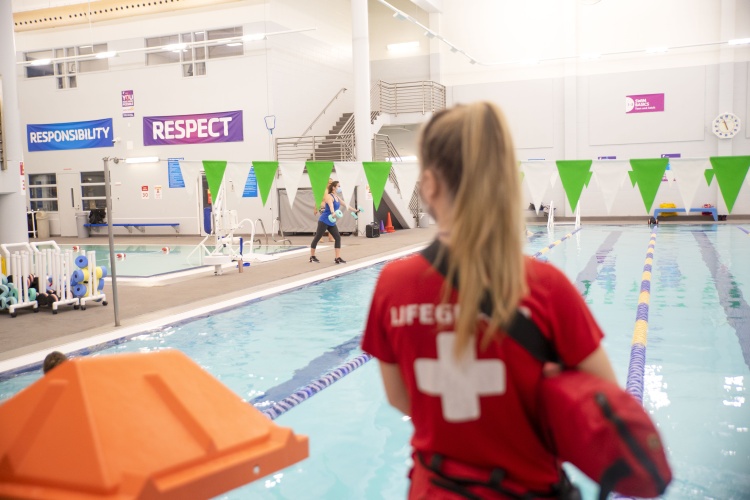 Summer and water go hand in hand. From pool days to lake trips to beach vacations, families are heading outside to cool off, connect, and make memories.
At the Y, we know water safety is about more than learning to swim. It is about developing water competency—the skills, knowledge, and behaviors that help people stay safer in and around water. Through Safety Around Water, we teach essential skills like “jump, push, turn, grab” and “swim, float, swim” so kids and adults know what to do if they unexpectedly find themselves in water.
But even with water competency skills in place, one truth rises to the surface every summer: water safety takes all of us.
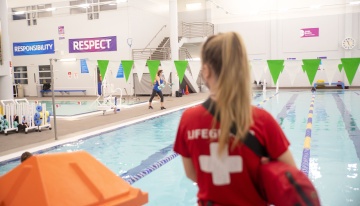
And no one sees that more clearly than lifeguards.
1. You are your child’s first line of defense
Lifeguards play an important role in keeping aquatic spaces safe. But they cannot replace the focused attention of a parent or caregiver.
“Lifeguards are here to keep everyone safe, but they are not a replacement for active supervision. You are your child’s first and most important line of defense in and around the water.” — Jenna Igel, YMCA of Greater Cincinnati
Lifeguards are trained to continuously scan the entire aquatic environment, enforce safety rules, and respond to emergencies. They cannot focus on one child at all times. When adults assume someone else is watching, risk increases. Safety begins with active supervision.
2. Drowning is fast, silent, and often unexpected
Many people imagine drowning as loud and obvious. In reality, it is often quiet and easy to miss.
“Drowning is not what you think. It is quicker and quieter than you have been led to believe.” — John Lewis, YMCA of Central Florida
Drowning can happen in seconds, even in shallow water or crowded pools.
“The scariest things can happen in the silence.” — Christina Carter, Great Lakes Learning Center
That is why uninterrupted, attentive supervision is one of the most important layers of protection.
3. Stay present. Distractions can wait.
One of the biggest risks lifeguards see is distraction. Phones, conversations, and everyday tasks can pull attention away at exactly the wrong moment. Our message is simple: Phones Down, Eyes Up™. Your attention can save a life.
“We need parents and guardians to stay engaged, stay close, and keep their eyes on their children at all times.” — Jenna Igel, YMCA of Greater Cincinnati
Active supervision means staying close, keeping children within sight, and remaining ready to respond immediately if needed.
4. Floaties are not safety devices
Inflatable toys and arm floaties are common at pool and beaches, but they can create a false sense of security.
“Any safety flotation device should be Coast Guard-approved.” — Nicole Bizuga, Hamilton Area YMCA (NJ)
Most pool toys are not designed to prevent drowning and can slip off, deflate, or fail unexpectedly. When flotation is needed, choose a properly fitted U.S. Coast Guard-approved life jacket -especially in open water. Even with a life jacket, active supervision remains essential.
5. Swimming skills help, but they are not a guarantee
Swim lessons are one of the most effective ways to reduce drowning risk and build water safety skills. Yet, water competency is only one layer of protection.
“While swim lessons reduce the risk of drowning, they do not eliminate it. It takes all of us.” — Nicole Bizuga, Hamilton Area YMCA (NJ)
Even individuals with strong swimming abilities can become tired, disoriented, or overwhelmed in the water. At the Y, we teach that no one is ever completely “drown-proof.” Safety comes from combining water competency skills, active supervision, awareness of aquatic environmental risks, and other layers of protection.
6. Lifeguards are prepared for what you do not see
Behind the scenes, lifeguards spend hours training, scanning, practicing emergency procedures, and refining their skills.
“We practice a lot to be sure we are ready to support you and your families, always. And we remember all the close calls, accidents, and lessons in between. All of them. — Christina Carter, Great Lakes Learning Center
That preparation enables lifeguards to recognize concerns quickly and respond when seconds matter.
7. Speak up. Safety is shared.
Water safety is a shared responsibility.
“It takes a village to keep children safe in and around the water. Do not assume lifeguards are watching every child every minute. If you see something, say something.” — Jeremy Stiles, YMCA of Greater Boston
If you notice something that does not look right, trust your instincts and alert a lifeguard or staff member. Speaking up could make all the difference.
8. When lifeguards blow the whistle, listen
No one enjoys being corrected at the pool, including lifeguards.
“It is really hard for us to blow the whistle. We hate it too. When we do, it is because we care.”— Christina Carter, Great Lakes Learning Center
Safety rules are not intended to limit fun. They exist to reduce risk and prevent emergencies before they happen. When a lifeguard gives direction, following helps create a safer environment for everyone.
9. Layering safety saves lives
When lifeguards talk about prevention, they consistently point to the importance of layers of protection.
“Supervise actively, not passively. Be present, have a plan, practice safety, and be screen free. While drowning is 100% preventable, there is no substitute for active adult supervision at all times.” — Christina Carter, Great Lakes Learning Center
Layers of protection include:
- Active adult supervision
- Swim lessons and water safety skills
- U.S. Coast Guard-approved life jackets when appropriate
- Understanding and following facility rules
- Awareness of aquatic environment, conditions, and potential hazards
- Four-sided fencing, barriers, ad self-latching gates around pools
- Door, gate, and pool alarms that alert adults to unsupervised water access
- Lifeguards where provided (while recognizing they do not replace supervision)
- Emergency preparedness, including knowing how to respond and call for help
- CPR and first aid training for parents, caregivers, and responsible adults
No single strategy can prevent every incident. The strongest approach is to use multiple layers of protection so that if one layer fails, others remain in place to help keep children safe.
The bottom line
Water is where memories are made. It is where confidence grows, families connect, and summer comes to life. It also demands respect, preparation, and attention.
Lifeguards are there to help. The Y is here to build water competency skills and confidence. But the most important role belongs to parents and caregivers.
Stay close. Stay alert. Stay present. Because when it comes to water safety, nothing is more important than a responsible adult who is fully engaged.